
Welcome to the Institute of Meteorology and Climate Research - Atmospheric Aerosol Research! We are one of the leading research institutes in the field of atmospheric aerosol processes in Germany.
Our team is dedicated to researching the microphysical, chemical and optical properties of aerosols. Through our work, we gain valuable insights into the role of aerosols in the atmosphere and their influence on cloud formation, climate and air quality, thus making a significant contribution to the further development of weather and climate models.
A particular research interest at the institute is the role of aerosols in the formation of ice particles.
For our research, we conduct comprehensive basic research in laboratories with state-of-the-art equipment. We also use large atmospheric simulation chambers to investigate complex atmospheric processes under controlled conditions. In addition, we conduct field experiments to analyze local situations and their specific influences in detail.
AIDA cloud microphysics aerosol ice formation SOA air quality ACTRIS aging composition & morphology radiative effect climate INP ice nucleation COSIMA single droplet VOCs ESEM ice crystals LiDAR atmosphere nano science climate engineering

A significant proportion of atmospheric aerosol particles are formed through the oxidation of volatile organic compounds (VOCs). These are primarily released from biogenic sources, such as forests, but also from biodiverse coastal regions, such as the Wadden Sea. In the summer of 2026, we therefore measured VOC concentrations in the Bay of Meldorf as part of the joint MOSES Wadden Sea measurement campaign. Five Helmholtz Centres and the University of Hamburg participated in this effort, also focusing on the greenhouse gas methane.
more
Volatile organic compounds (VOCs) contribute substantially to the formation of atmospheric aerosols via oxidation reactions. VOCs are predominantly emitted from biogenic sources, such as forests, but also from anthropogenic sources, which are typically concentrated in urban areas. In August 2026, we measured VOC fluxes in the Eifel Forest and VOC concentrations in the centre of Cologne, in order to validate airborne VOC flux measurements taken using a Zeppelin NT airship. Our colleagues from Forschungszentrum Jülich organised the international CC-FLUX campaign.

A familiar chapter in the institute's history has come to an end, and a new one has begun. On 7 July 2026, the new AIDAc2 atmospheric simulation chamber was successfully installed at Campus North, replacing the AIDAc facility that supported groundbreaking atmospheric research for almost 30 years. The milestone represents an important investment in the future of climate and atmospheric science at KIT.
more
As part of the ACTRIS ECCINT-03 campaign, novel cloud measurements are being conducted at the Sonnblick Observatory. A laser polarimeter is being used by the IMKAAF to analyze cloud droplets and ice crystals. This instrument is being used in comparison with other measuring instruments.
more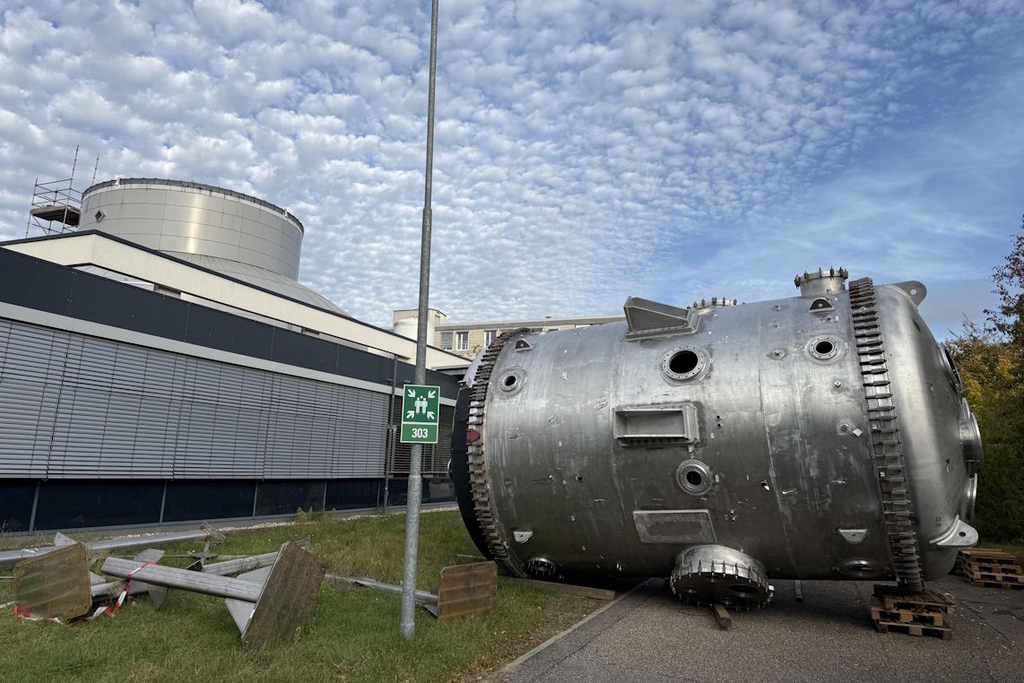
For almost 30 years, the KIT cloud chamber AIDA (Aerosol Interaction and Dynamics in the Atmosphere) was used for research on atmospheric aerosol and cloud processes. The research facility currently undergoes a complete renovation and will be replaced by the new atmospheric simulation chamber AIDAc2, where ‘”c2” stands for “cold and clean”. A major milestone of this project was reached on 29 September 2025, when the cloud chamber with a diameter of 4 m and a height of 7.5 m was moved from its place in the facility to the street in front of the building for its segmentation and proper disposal.
more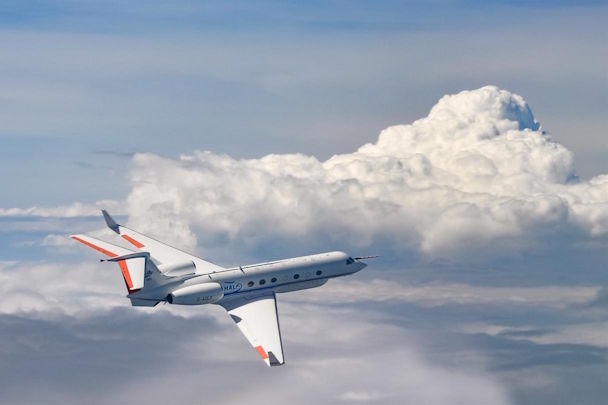
PINEair is a new version of the Portable Ice Nucleation Experiment PINE for aircraft-based measurements of ice-nucleating particles (INPs). For the first time, the instrument measures INPs onboard the German research aircraft HALO during the HALO-SOUTH mission, which targets aerosol-cloud interaction in the Southern Ocean region between New Zealand and Antarctica.
more